One app, one loop.
Read a book, meet a word you don’t know, and keep it. Everything below exists to make that loop close by itself — nothing to file, nothing to copy out by hand.
Your own books
Upload EPUB, PDF, or plain text straight from your phone, or paste a direct link to one. Prefer to browse? The built-in library has hundreds of public-domain classics, one tap to add.
A reader that keeps its place
Chapter-aware, paged, and quiet. Continue reading picks up exactly where you left off, on any device you sign in from.
Tap any word
Long-press a word for its definition without leaving the page — and it’s added to that book’s deck at the same time, because asking what a word means is the clearest possible signal you don’t know it yet.
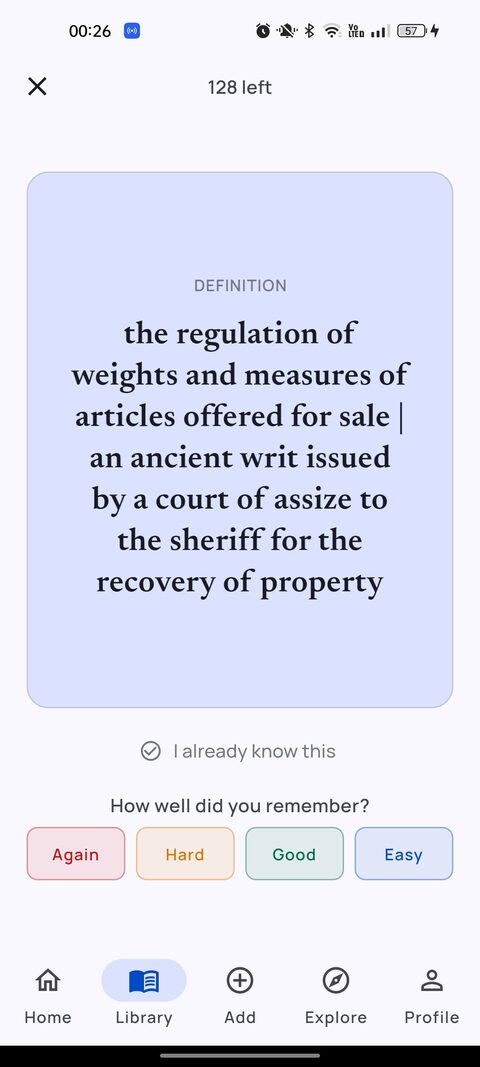
Only the words above your level.
When a book finishes processing, Tilia has already looked up every word in it against a full English dictionary and thrown away everything you almost certainly know. What’s left becomes your deck.
Lemmas, not word forms
Meet “beguiled” on the page and you study beguile. Inflections are resolved back to the dictionary headword, so a deck never holds the same word four times.
In context
Every card carries the sentence you actually met the word in — the difference between memorising a definition and remembering a word.
Then it makes sure you keep them
Flashcards, quizzes, and a review schedule that gets out of your way as words stick.
Spaced repetition
Reviews are scheduled by an SM-2 algorithm: get a word right and it comes back later, get it wrong and it comes back soon. A word graduates once it survives three weeks.
Quizzes per book
Multiple-choice rounds drawn from the book you’re actually reading, so review stays attached to the story rather than a generic word list.
A daily goal you can hit
A small, honest target with a streak behind it, plus an optional evening reminder if the day got away from you.
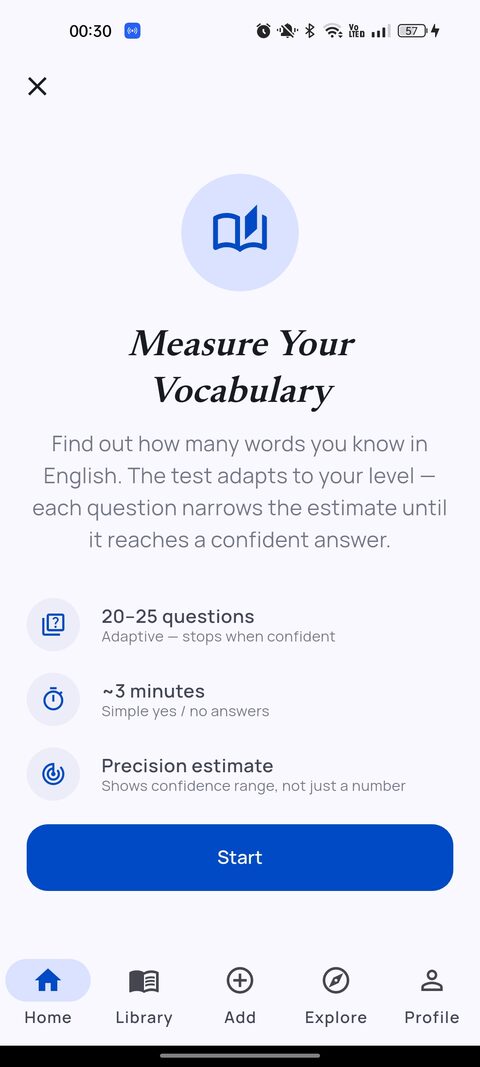
Measure your vocabulary in three minutes.
An adaptive test, not a quiz: every word is chosen to learn the most from your answer, and it stops the moment the estimate is confident. You get a number and the range around it — and that number is what decides which words a book surfaces for you.
Read it with someone.
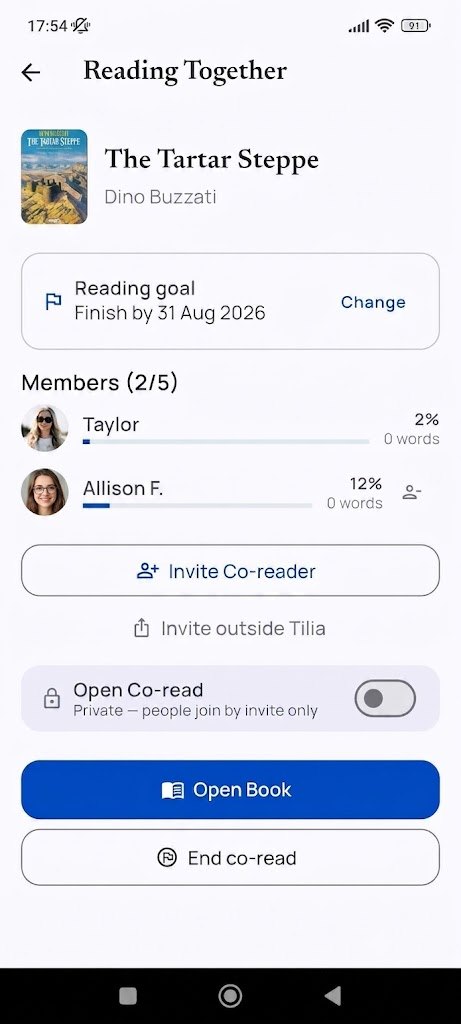
Start a co-read on any book, set a finish date, and invite people — by link, or straight to a friend in the app. Everyone sees the same pages and their own progress against the group’s.
- Shared highlights. Push a passage into the room and reply to each other underneath it, in the pages rather than in a group chat.
- Joining is always free. A book someone invites you into never costs you a shelf slot while the co-read runs.
- Your words stay yours. Everyone builds their own deck from the same book, at their own level.
Growth you can see
Because “I read more this year” is not a measurement.
Words learned, by book
Weekly and monthly counts, plus how much of each book’s vocabulary you’ve actually taken with you.
Levels with roots
Points for words in progress and words mastered carry you from Seedling to Ancient Linden. Each level costs more than the last, so none of them are free.
Friends and invites
Add friends, invite them into a book, and get notified when they join, reply, or finish.